
News and Events
25.04.11 - OpenSceneGraph support and additional libraries.
- The current checkout version of inVRs framework now supports a second scene graph - OpenSceneGraph. This makes the use of a fair set of additional features possible. Thanks a lot to Samuel Gratzl for porting inVRs to OpenSceneGraph.
- The ufo library develeopd by Johannes Zarl is available for the inVRs framework. This library allows the design and usage of flocking and steering algorimthms. A documentaion can be found here.
- An additional module for Free Form Deformation developed by Marlene Hochrieser can be found here.
- An example project developed by Thomas Hribernig during the Mixed Reality Systems course SS 2010 at the JKU Linz can be found here. The application allows to arbitrary arrange pictures taken from a camera or a mobile phone in a CAVE or other immersive environment.
- The inVRs editor, developed by Georg Wöss, is available in a preliminary version in the repository.
17.09.10 - inVRs half-day tutorial and presentation
- The Developing VR Applications With The inVRs Framework - Tutorial will be presented on Tuesday 28.09.2010 at the JVRC 2010 in Stuttgart, Germany.
- Course material will be online beforehand here.
- An introduction on how to develop Networked Virtual Environments with inVRs is given on Tuesday 21.09.2010 at the 2010 Virtual Prototyping summer school in Milan, Italy.
04.08.10 - inVRs finally migrated to Redmine
- The inVRs framework changed the web interface from trac to Redmine resulting in many changes of the webpage.
- The repository for the current versions is up and can be publicly checked out from http://dev.invrs.org/svn/inVRs/. Or accessed via a web interface here.
- Current checkout versions of inVRs contain a branch wich provides support for OpenSG2
26.12.09 - inVRs half-day tutorial at IEEE VR 2010 Waltham, MA, USA
- Developing VR Applications With The inVRs Framework - Tutorial will be presented im March 2010 at the IEEE VR 2010 Conference.
- Course material will be online beforehand here.
About
To improve the development process of Virtual Environments (VEs) and Networked Virtual Environments (NVEs) the inVRs (interactive networked Virtual Reality system) framework provides a clearly structured approach for the design of highly interactive and responsive NVEs. It consists of three independent modules, one for interaction, one for navigation, and one for network communication, two interface layers to support a variety of output and input devices, and a system core which stores and manages the state of the VE. It is developed following Open Source principles (LGPL) and can be used freely. It runs on Windows, Linux, Mac, and IRIX.
Application Areas
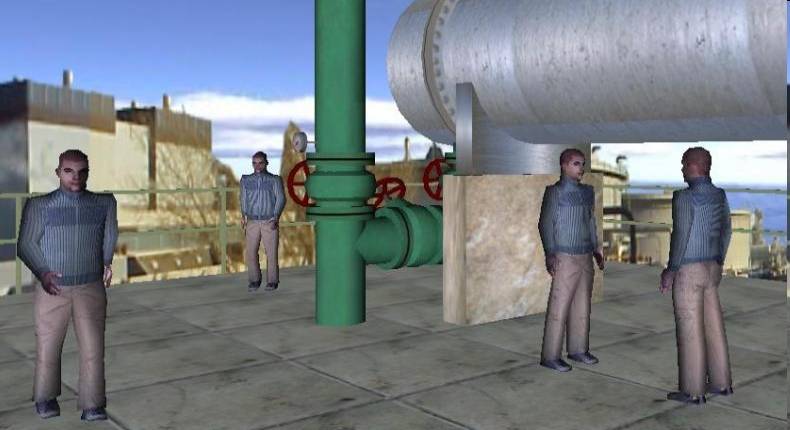
Safety Training
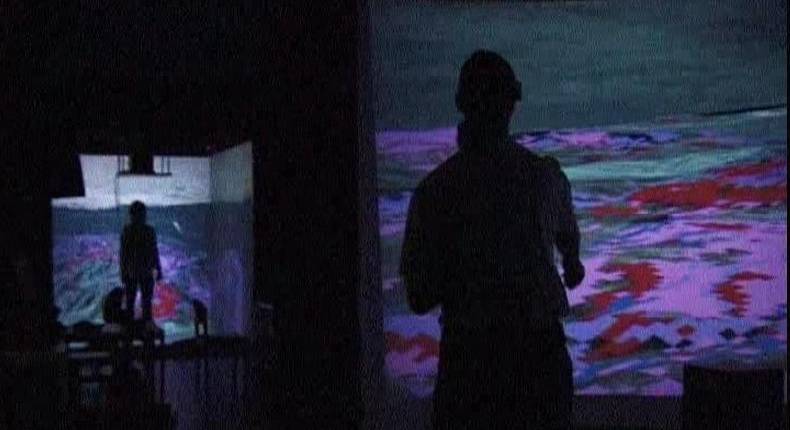
Collaborative Work
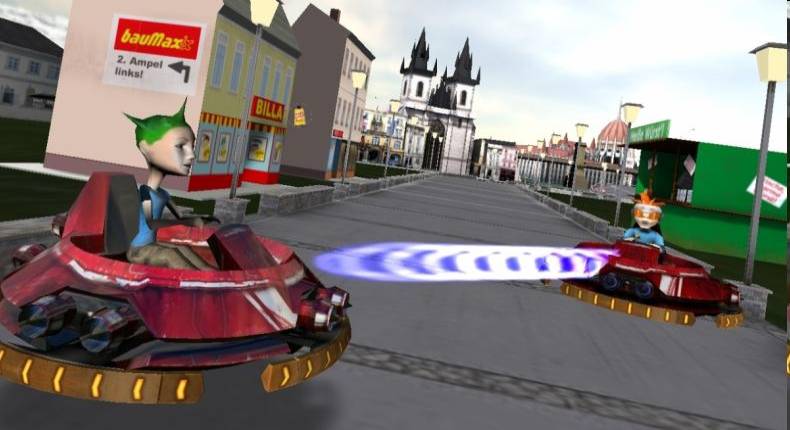
Entertainment
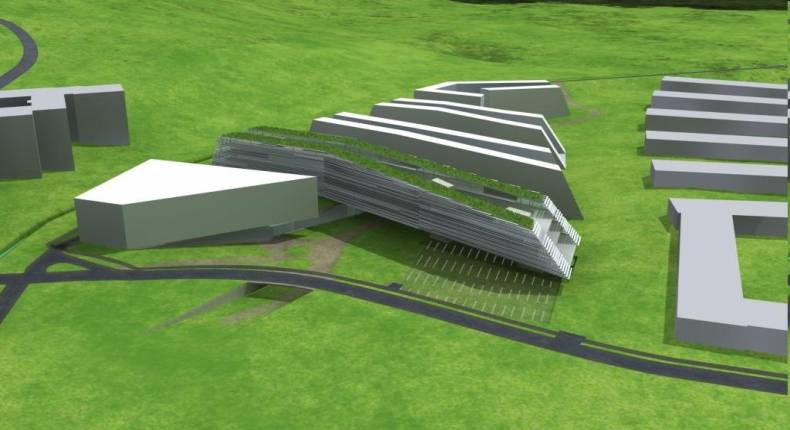
Architecture
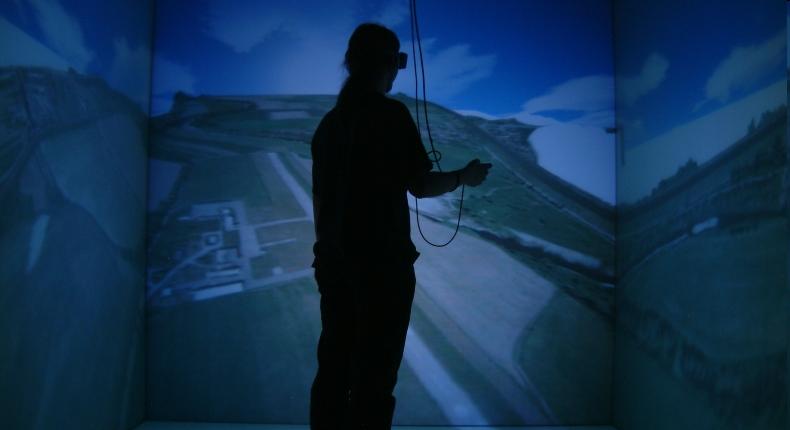
Scientific Visualisation
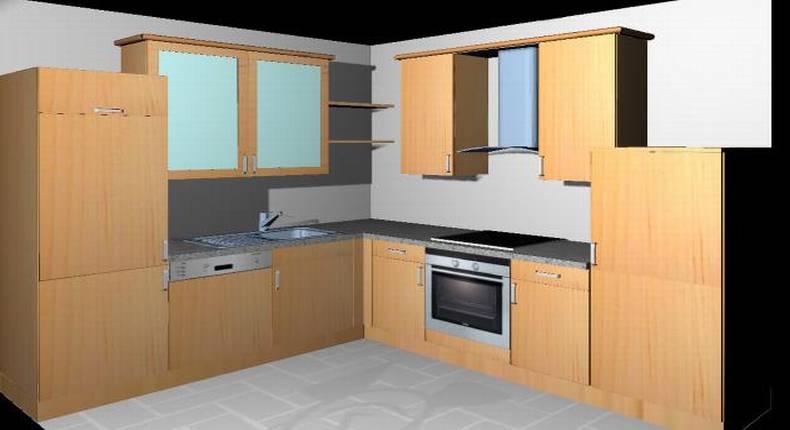
Product Presentation
Features
- Cross-platform API (Windows, Linux, MacOS X)
- Runs on desktop as well as multi-display systems
- Highly efficient rendering due to use of OpenSG as a scene graph
- Simple mechanisms to integrate arbitrary input devices
- Clear ways to structure Virtual Environments
- Automatic network distribution and sharing of virtual worlds
- Pre-defined navigation and interaction techniques
- Well structured, modular, extensible framework components
- Many out-of-the-box features like networked physics simulation, avatars, etc.
- Immediate support for concurrent object manipulation
- Configurable via XML
Overview
Networked Virtual Environments (NVEs) are getting more and more attention from the industry and research facilities. A vast amount of application areas ranging from psychology, architecture, training, scientific visualization over to art and entertainment are using Virtual Reality (VR) technology. But it is still challenging to develop such applications since many aspects from a variety of research areas have to be taken into account. Software design, hardware development and human factors are to be considered for the creation of efficient NVEs.
Most VR applications still follow a low-level approach, where the NVE is tailored specific to the application domain. The use of scene graphs in combination with a complete application development is still cumbersome since often the mechanisms for interaction, navigation and synchronization are reinvented. On the other hand VR applications can be created using existing NVEs, relying on scripting languages or authoring environments where graphical editors ease the design and development process. One of the major drawbacks of these solutions is their restrictiveness.
To overcome these mentioned issues and to ease the design and development process of NVEs the inVRs framework was developed. inVRs provides a structured approach using well-known software patterns. It is designed to formalize and reuse common interaction techniques and navigation methodologies, with the feature of automatic network distribution, by keeping up the needed flexibility of the low-level solutions.
Additional tools have been created for inVRs like the support of physics engines, a graphical editor for the layout of a VE, and a 3D widget system inside virtual worlds. Through the approach chosen for the internal communication and the network module the out-ofthe-box feature of concurrent object manipulation is supported. The inVRs framework is publicly available under an LGPL license at http://dev.invrs.org/. It has been developed from 2005 till 2009. A large number of researchers and computer science students contributed to the code base of the framework and have created over 10 applications from the domains of new media art, architecture, entertainment, safety training, product presentation, and scientific visualization.